
Pickup & Recycling
Empty IBCs?
We'll come get them.
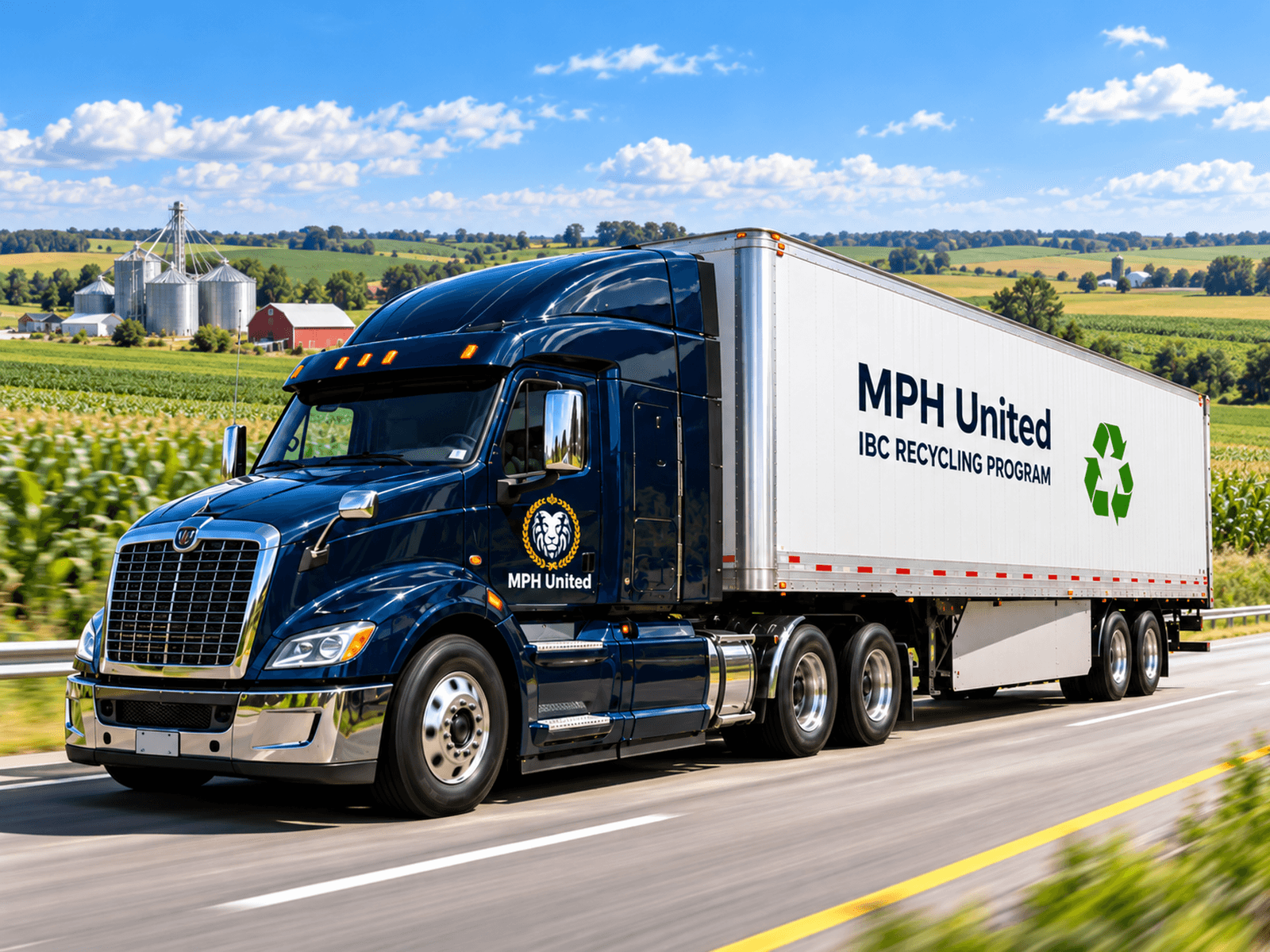
We pick up empty reusable IBCs across North America and wash or rebottle them at our own facilities. Submit the request form and we'll handle the logistics.
How it works
Pickup in three steps
- 01
Submit the form
Shipper info, container details, and a signature. Photos help us move faster.
- 02
We confirm logistics
Our team verifies the containers qualify and arranges freight for your dock and schedule.
- 03
We pick them up
Containers head to the nearest MPH facility to be washed or rebottled and put back into service.
Schedule Pickup
IBC Recycling Request Form
Fields marked * are required. We'll follow up to confirm your pickup date.
Use the online form below, or if you prefer, you may fill out our PDF form: Download the PDF form and email it to recycling@mphunited.com or you may also call 517-230-9405 for more info.
Terms and Conditions
Program rules
IBCs that previously contained hazardous materials (identified by a UN number and hazard diamond label) must be drip dry, completely empty, and free of residue. All IBCs must display proper labeling in accordance with U.S. Department of Transportation (DOT) regulations. Per DOT 49 CFR §173.29, all openings must be securely closed, including valves, lids, and bung plugs.
All IBCs must be in reusable condition. Non-reusable units will be subject to freight and disposal charges. To be considered reusable, an IBC must have: an intact, non-crushed pallet base (metal or plastic only; wood pallets are not accepted) and a metal cage that is not bent and free of corrosion.
IBCs that previously contained "P-listed" and "U-listed" hazardous waste or materials included on the EPA List of Lists must be triple-rinsed. All labels must be removed.
The following chemistries in Agricultural Chemical IBCs and Drums must be triple rinsed, completely empty, and labeled as such:
- 2,4-D
- Dicamba
- Atrazine
- Pendimethalin
- Chlorothalonil
- Paraquat
- Diquat
- Lo-Vol 6
- 2,4-D LV 6
- 2,4-Dichlorophenoxyacetic acid
- Amine Salts
- Choline Salts
- Esters
- Enlist
- Crossbow
All IBC's received with excess hazardous material residue and/or not triple rinsed will be rejected and returned to the shipper at the shipper's expense. All IBC's received with excess non-hazardous material will be charged a $25.00 per gallon disposal fee that is to be paid immediately.
FAQ
Pickup questions
Do the IBCs need to be washed first?
All containers must be drip dry, free of residue, and completely empty with all closures shut. Containers that held “P-listed” and “U-listed” hazardous waste or EPA List of Lists materials must be triple-rinsed, with labels removed and the container marked “triple rinsed.” The agricultural chemicals listed on our Pickup page must also be triple-rinsed and labeled as such.
What if my containers held hazardous materials?
Hazmat IBCs (UN number and hazard diamond label) must be drip dry, free of residue, and properly labeled per DOT. Containers with excess hazardous residue are rejected and returned at the shipper's expense. Containers that held “P-listed” and “U-listed” hazardous waste or EPA List of Lists materials, or any of the agricultural chemicals named in our Terms and Conditions, must be triple-rinsed and labeled as such.
What makes an IBC “reusable condition”?
An intact, non-crushed pallet base (metal or plastic only — no wood pallets) and a metal cage that isn't bent and is free of corrosion. Non-reusable units are subject to freight and disposal charges.
What happens to the containers?
They're washed or rebottled at one of our production facilities and returned to service — that's the heart of our recycling program.